
I spent the first part of my career as a rapper. From there, I moved into fashion, and eventually into advertising and media. Along the way, I started to realize just how many different ways there were to build a career around creativity.
When I was younger, music was the creative career I understood. I knew what a rapper was. I knew what a producer was. But there were entire creative professions I didn’t even know existed.
Creative director. Brand strategist. Product designer. Art director. There were people making a living from ideas in ways I had never been exposed to.
It wasn’t that I suddenly became creative once I discovered those things. I had always been creative. I just didn’t know all the places that creativity could take me.
Music was my first entry point into that world.
Being an artist put me in recording studios, on sets, at shows and around people doing all kinds of creative work. Moving into fashion, and later advertising and media, exposed me to even more ways creative people could build careers around their ideas.
And the more I look at the careers of some of the artists I came up watching, the more I wonder how many of them experienced some version of the same thing.
Maybe music isn’t always the final destination.
Maybe it’s simply the first creative career some artists know is available to them.
During my years as an artist, I got to watch people like Nipsey Hussle and Kendrick Lamar build their careers up close. I was in recording studios with them and their teams, performed on some of the same bills and worked with many of the same people.
We weren’t friends, and I wasn’t part of their teams. But I was close enough to notice something that has stuck with me.
Neither of them was building alone.
There were photographers, designers, directors, managers and other creatives around them helping shape everything that existed beyond the music.
The visuals. The clothes. The videos. The ideas. The way they presented themselves to the world.
At the time, I didn’t have the professional language I have now to describe what I was seeing.
Looking back, they were building creative ecosystems.
And as their careers grew, so did the range of things they could create.
MUSIC MIGHT JUST BE THE FIRST MEDIUM
Success in music obviously brings money, access and influence. But there’s another benefit that doesn’t get talked about as much.
Exposure.
Imagine becoming successful as a rapper in your early twenties.
Suddenly you’re on a video set watching a director work. You’re sitting with a designer developing merch. You’re talking through the stage for your tour. You’re working with photographers, stylists, filmmakers, fashion houses, advertising creatives and product designers.
You start encountering entire creative careers you may never have known existed.
And at some point, the realization might be pretty simple:
Wait. I can do this too.
Or maybe even:
I’ve been thinking this way the whole time. I just didn’t know there was a name for it.
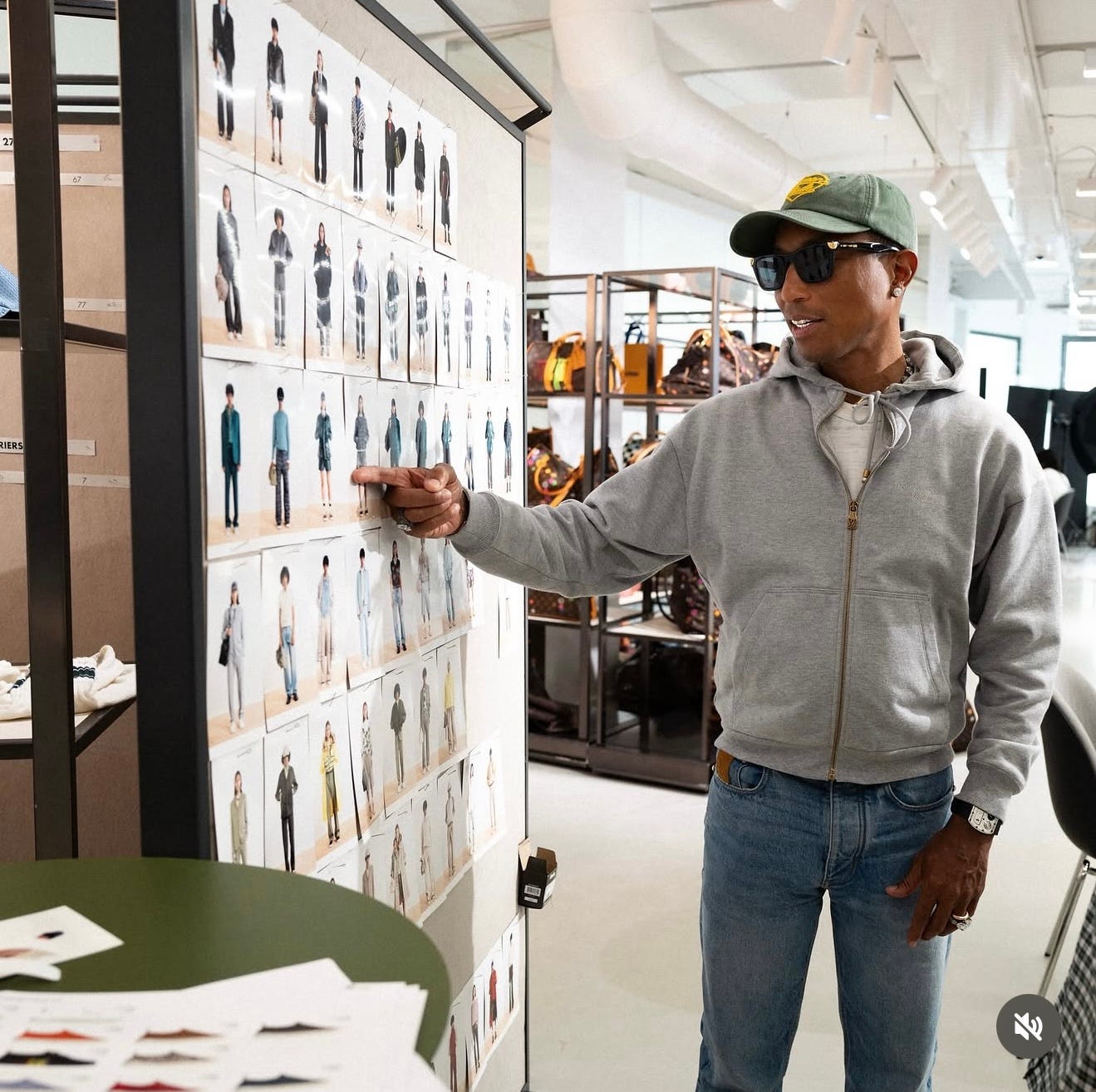
Pharrell Williams reviewing looks inside the Louis Vuitton studio.
Pharrell is one of the clearest examples of what a career can look like once those boundaries start disappearing.
We first knew him as a producer and artist. But the career that followed became increasingly difficult to define through music alone.
He built clothing brands. Designed products. Worked across art and design. Became men’s creative director at Louis Vuitton. He even told his life story through LEGO with Piece by Piece.
On paper, those can look like completely different careers.
But maybe they aren’t.
Maybe they’re different expressions of the same creative person.
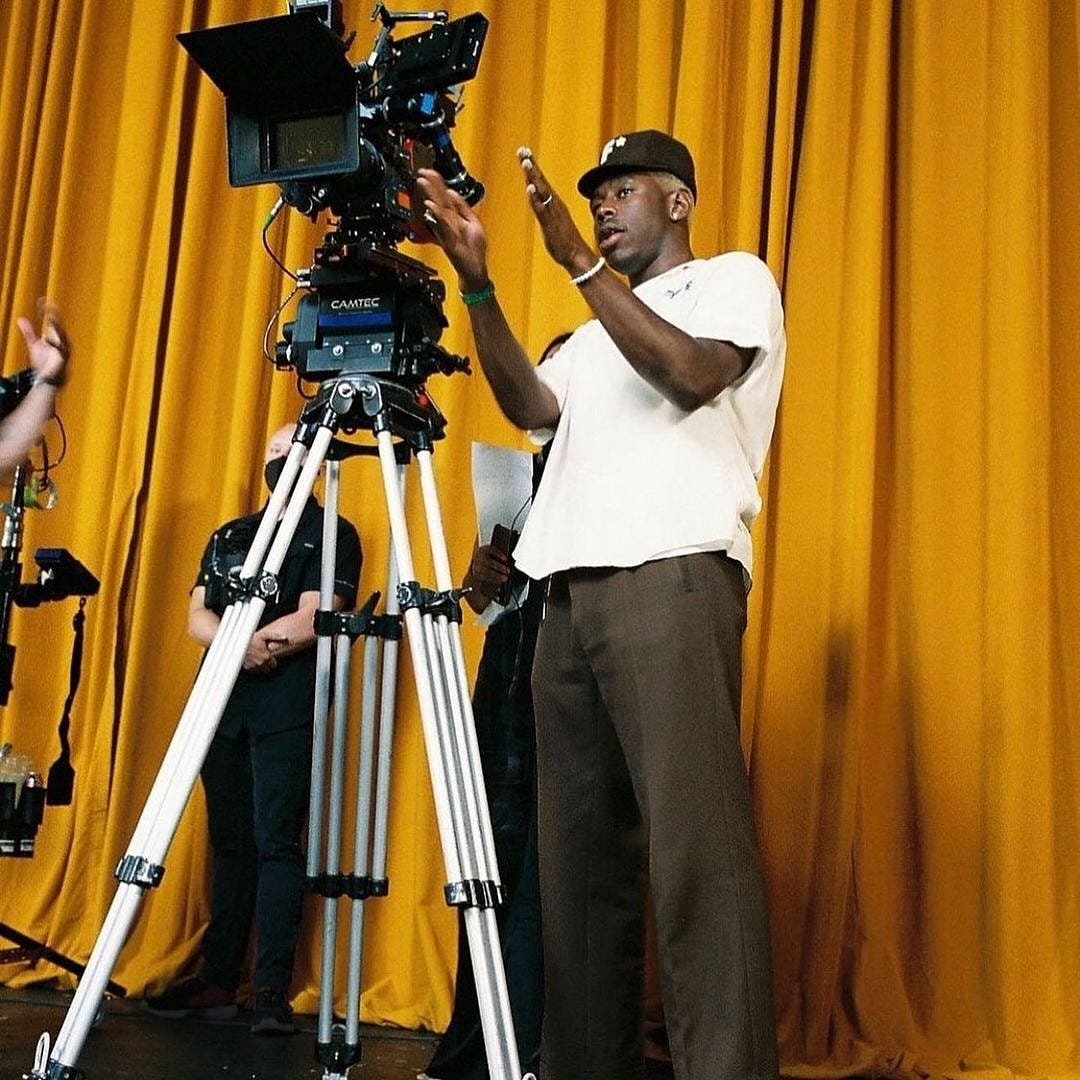
Tyler, the Creator behind the camera.
Tyler, the Creator makes albums, but he also directs videos and commercials, designs clothes and products and built Camp Flog Gnaw into a festival that reflects his own creative world.
Vince Staples turned his point of view into The Vince Staples Show. Dave Burd took Lil Dicky into television with Dave. Action Bronson found another outlet through food and travel while also exploring art, sneakers and product collaborations.
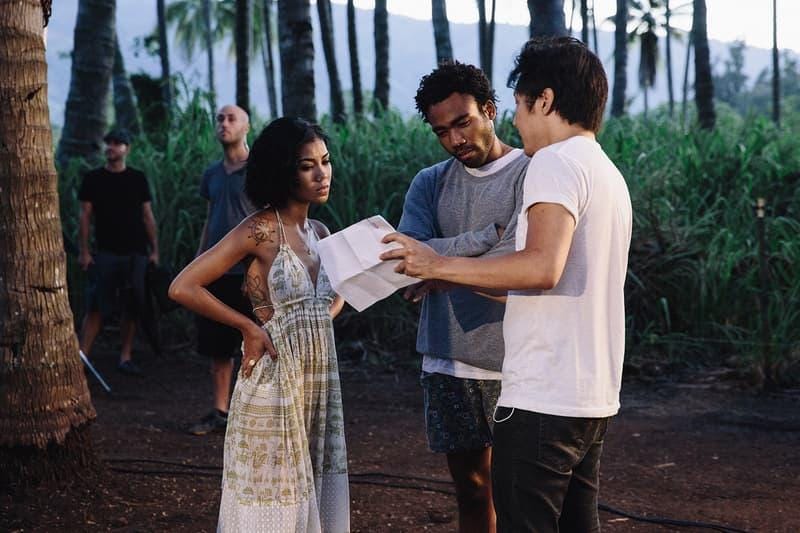
Donald Glover working on set.
A$AP Rocky has moved into fashion, design and creative direction. Donald Glover has built a career across music, television, film, writing and directing.
The mediums keep changing.
The creative point of view doesn’t.
That’s why I’ve started wondering if the way we describe these careers is backwards.
We say someone is a rapper who also designs clothes. Or a rapper who also directs. Or a rapper who also acts.
But what if they’re simply creative people who happened to become known through music first?
Music is where we met them.
That doesn’t mean music is where their creativity has to end.
GETTING INTO THE ROOM CHANGES WHAT YOU THINK IS POSSIBLE
Kanye West might be one of the clearest examples of what can happen when an artist refuses to accept the boundaries of the role they were given.
Hip-hop’s relationship with fashion obviously didn’t begin with Kanye. Rappers had been shaping what people wore long before he came along.
But Kanye aggressively pushed against the idea that a rapper’s role in fashion was simply to wear the clothes, endorse the product or sit in the front row.
He wanted to make the product.
His early work with Louis Vuitton and Nike mattered for that reason. He wasn’t satisfied with simply being the celebrity attached to someone else’s idea. He wanted access to the process itself.
[IMAGE: KANYE WEST SURROUNDED BY YEEZY FOOTWEAR]
Kanye West surrounded by Yeezy footwear prototypes outside the Yeezy office in Calabasas. Photo: Jamel Toppin for Forbes.
And that’s the part of the story I find most interesting.
Getting access to new rooms changes what you know is possible.
You see how a shoe gets designed. How a campaign gets made. How a film gets directed. How a collection comes together. You meet people whose entire careers are built around disciplines you may never have encountered before.
That access doesn’t automatically make someone a great designer, director or entrepreneur. Being talented in one discipline doesn’t guarantee talent in another.
But it can give someone who is already creatively curious the opportunity to find out what else they’re capable of.
THE ARTIST WAS NEVER DOING ALL OF THIS ALONE
There’s another part of this evolution that’s easy to miss.
Creative control doesn’t mean doing everything yourself.
Some of the most distinct artists have spent years building relationships with people who understand their point of view and can help translate it into different mediums.
Kendrick Lamar has Dave Free.
Nipsey Hussle worked with creatives like Jorge Peniche.
Kanye had Virgil Abloh.
Rocky has built long-term relationships with collaborators across fashion, photography, styling and design.
Their roles aren’t interchangeable. A photographer isn’t suddenly a creative director. A stylist isn’t a brand strategist.
But collectively, those relationships help answer a much bigger question:
How should this artist exist in the world?
That question can touch everything.
Album artwork. Videos. Photography. Clothes. Stage design. Merch. Products. Typography. Social media. Brand partnerships. Even the opportunities an artist decides not to take.
Over time, those individual decisions begin to create a world around the artist.
And eventually, that world can become something more formal.
The company may be new. The behavior isn’t.
NOW THE CREATIVE ECOSYSTEM CAN BECOME THE COMPANY
Kendrick Lamar and Dave Free built pgLang.
A$AP Rocky built AWGE.
Donald Glover built Gilga.
They’re very different companies, but I think they’re part of the same evolution.
Instead of an artist needing to build a completely different team every time an idea moves into another medium, the creative infrastructure can begin to live around the artist.
That infrastructure can make films. Design products. Create experiences. Develop campaigns. Work with brands. Work with other artists.
The artist isn’t simply branching into another industry anymore.
They’re building infrastructure that allows their ideas to move between industries.
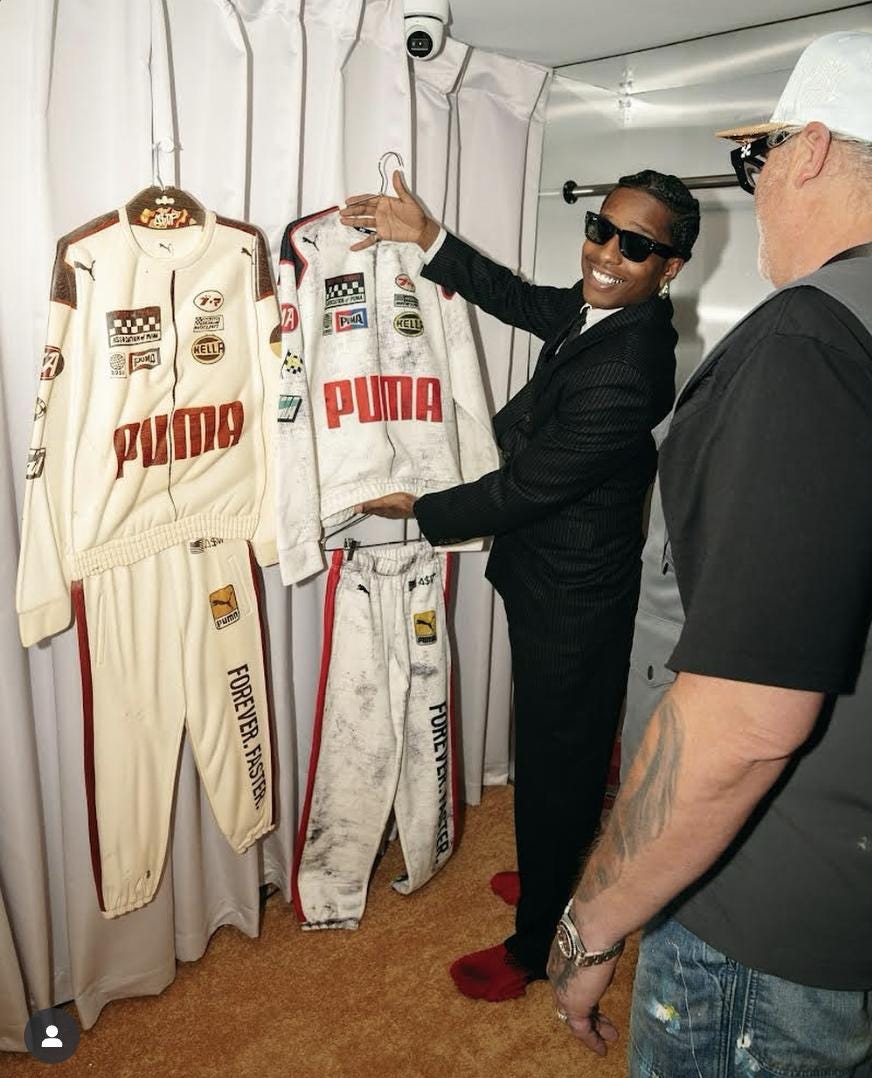
A$AP Rocky reviewing pieces from his PUMA collaboration. Photo: [CREDIT]
That’s an important shift.
Instead of asking, What industry does this person belong to?
The more interesting question becomes:
What does this person want to make?
The medium can follow the idea.
First you build the world.
Then you build the infrastructure that allows that world to grow.
THAT CHANGES THE RELATIONSHIP WITH BRANDS, TOO
This is where my years working in advertising and media make the shift particularly interesting to me.
Brands spend a lot of time talking about how to “tap into culture.”
Traditionally, there’s often an agency somewhere in the middle helping make that happen.
Brand → Agency → Idea → Artist
There’s nothing inherently wrong with that model. Agencies have expertise, infrastructure and talented creative people.
But every additional layer can also create another point of translation.
The brand has an objective.
The agency interprets it.
The idea moves through approvals.
Eventually, an artist may be brought in to help give the idea cultural relevance.
But that raises a pretty obvious question:
If you’re hiring the artist because you value their taste, ideas and cultural influence, why wouldn’t you want their ideas too?
Travis Scott is a useful bridge between the two models.
His relationships with Nike and Jordan have extended well beyond appearing in advertisements. His McDonald’s collaboration wasn’t simply a celebrity appearing in a commercial either. Product, merchandise and the larger creative rollout became part of the partnership.
The more interesting evolution happens when an artist has creative infrastructure of their own.
Instead of:
Brand → Agency → Idea → Artist
you can increasingly imagine:
Brand → Artist-Owned Creative Company → Idea + Production + Artist
That doesn’t mean agencies disappear.
But it does challenge the assumption that an agency always needs to be the translator between a brand and the people shaping culture.
Sometimes the people shaping culture have built creative infrastructure of their own.
MAYBE “RAPPER” WAS ALWAYS TOO SMALL OF A JOB DESCRIPTION
None of this means every rapper secretly wants to design shoes, direct movies or start a creative company.
And it doesn’t make the music less important.
But it has made me think differently about my own career.
When I started rapping, I didn’t have some master plan to eventually work in fashion, advertising and media.
I didn’t even know some of the jobs I would eventually do existed.
What I knew was that I wanted to make things.
Music gave me somewhere to put that instinct.
Then one room led to another.
I learned about fashion. I learned about branding. I learned about advertising. I learned about creative strategy. And each new world gave me another way to understand something that had been there the entire time.
I liked ideas.
I liked making things.
I liked figuring out how those things should look, feel and exist in the world.
And I wonder how many artists have gone through some version of that same discovery.
Maybe someone starts making music and eventually finds themselves sitting in a room with a fashion designer.
Or watching a director work.
Or looking over product samples.
Or developing a television show.
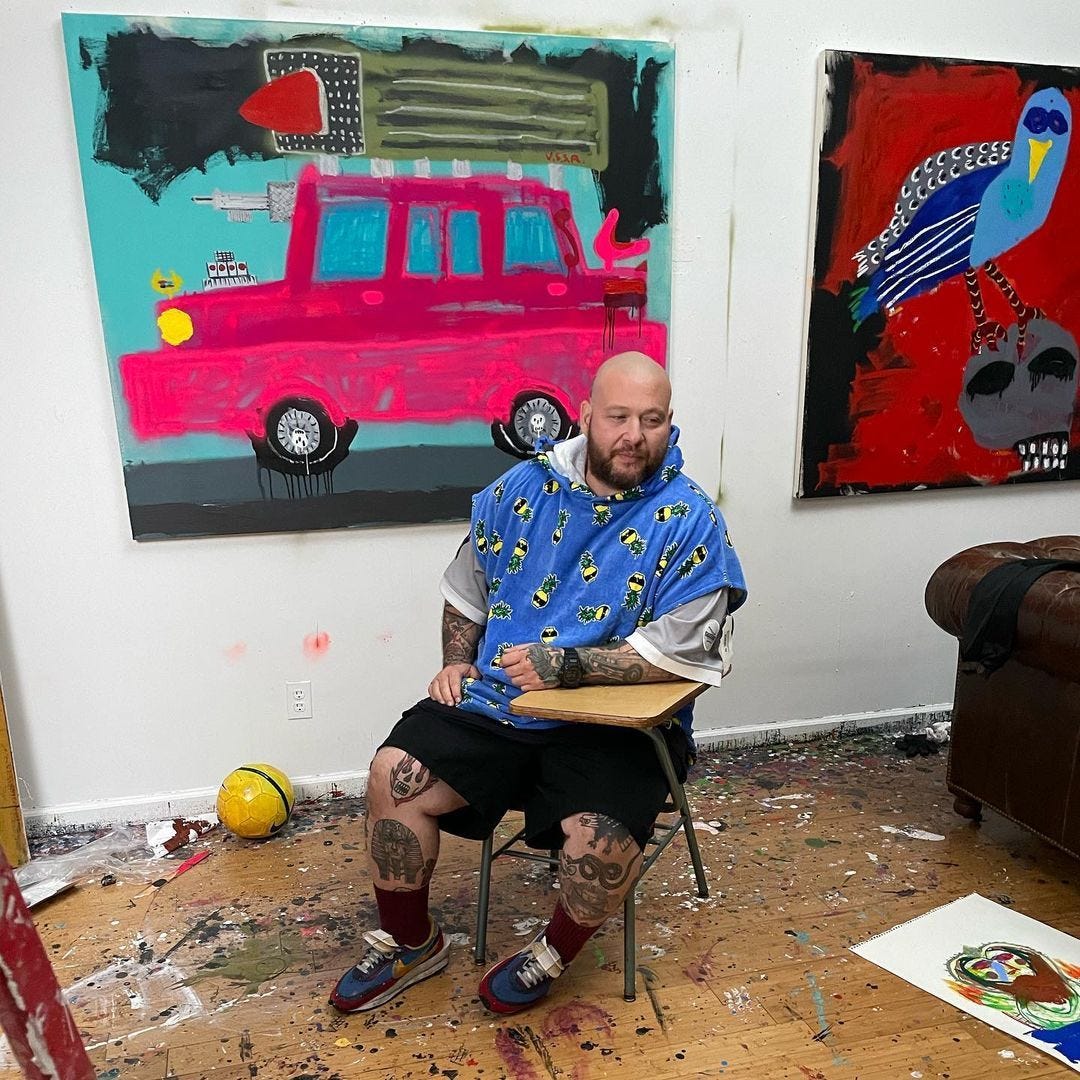
Action Bronson working in his art studio.
Maybe those instincts were already there.
They just needed somewhere to go.
New rooms lead to new disciplines.
New disciplines lead to new collaborators.
New collaborators create new possibilities.
Eventually those possibilities can become clothes, films, products, festivals, television shows, brands and even companies.
That’s why I don’t think the most interesting thing happening is that rappers are becoming entrepreneurs.
And I don’t think it’s simply that rappers are “doing more.”
They’re discovering how much bigger their creative lives can be.
Music may be where the world first discovers them.
For some artists, it’s only the beginning.
